
10 Simple Ways to Improve Gut Health Naturally

10 Simple Ways to Improve Gut Health Naturally
By Barbara Lewin, RDN, LDN
Sports Nutritionist and Functional Dietitian
If you want to improve gut health naturally, you don’t necessarily need to start with an expensive probiotic or supplement. Some of the most important things you can do happen at the grocery store, at the dinner table, and even in how well you chew your food.
Here are 10 simple ways to support a healthier gut.
1. Eat More Fiber
Fiber helps support regular bowel movements and provides food for beneficial gut bacteria.
Include vegetables, fruit, beans, lentils, whole grains, nuts, and seeds. If your current diet is low in fiber, increase it gradually. Adding too much too quickly can cause gas and bloating.
2. Eat a Greater Variety of Plant Foods
Don’t rely on the same three vegetables every week.
Different plant foods provide different fibers and beneficial plant compounds. Rotate your fruits, vegetables, beans, whole grains, nuts, seeds, herbs, and spices.
3. Put More Color on Your Plate
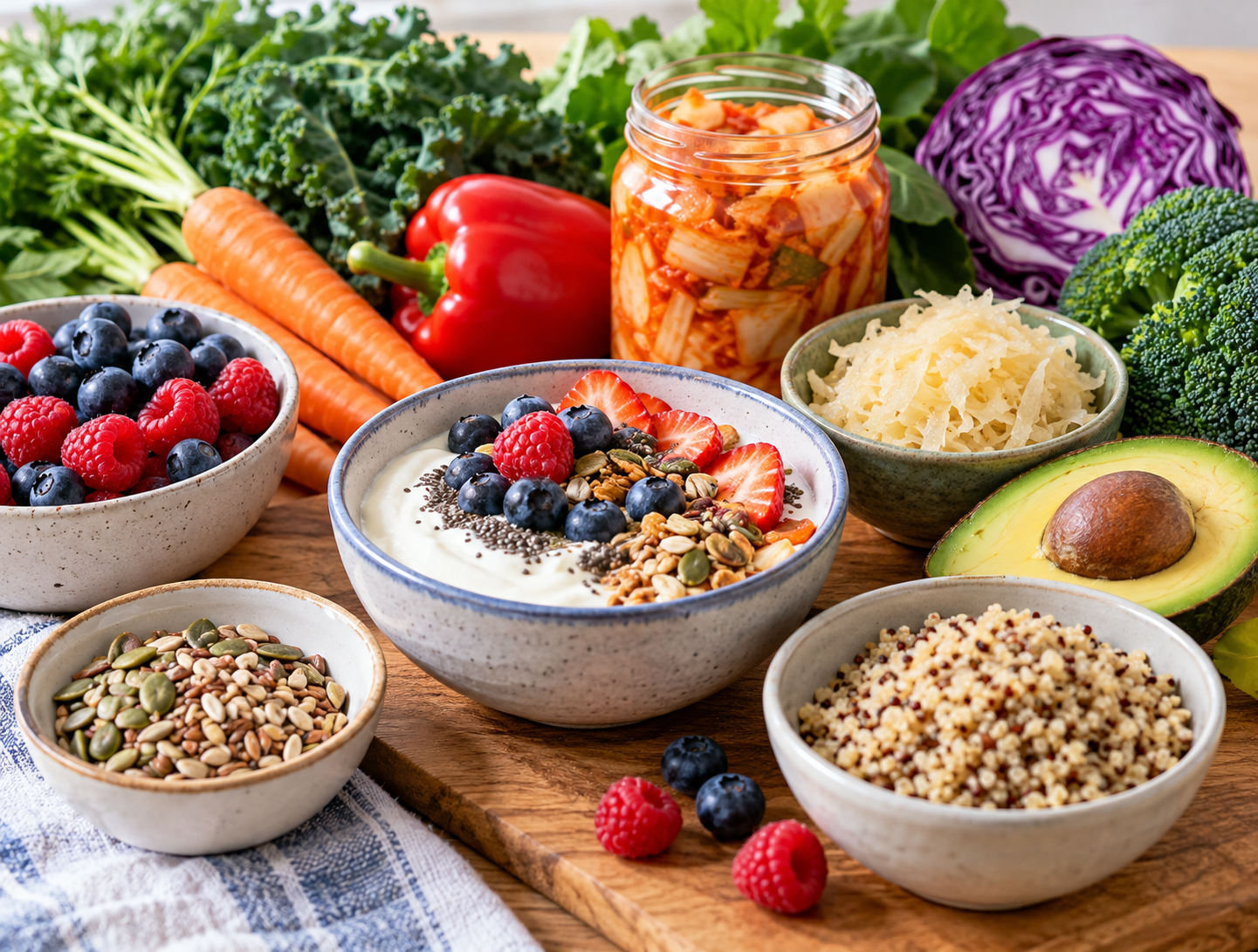
Blueberries, leafy greens, tomatoes, carrots, peppers, broccoli, purple cabbage, and other colorful foods contain polyphenols and other plant compounds that can help support a healthy gut environment.
An easy goal is simply to eat more colors throughout the week.
4. Add Fermented Foods
Foods such as:
- Plain yogurt
- Kefir
- Sauerkraut
- Kimchi
- Other traditionally fermented vegetables can introduce beneficial microorganisms and add variety to your diet.
You don’t need all of them. Start with foods you actually enjoy and tolerate.
5. Stay Hydrated
Your digestive system needs adequate fluid to function normally, particularly when you’re increasing fiber.
Water needs vary based on your size, activity level, environment, and sweat losses. For athletes, hydration and electrolyte needs can be considerably higher.
6. Chew Your Food Well
Digestion starts before food reaches your stomach.
Chewing mechanically breaks food into smaller pieces and mixes it with saliva, making the rest of the digestive process easier. Slow down, chew thoroughly, and try not to rush through every meal.
It’s simple advice, but it’s something many people overlook.
7. Rethink Late-Night Eating
One pattern I commonly see with clients who have digestive complaints is eating relatively little earlier in the day and then having their largest meal at night, sometimes followed by sweets.
Large meals close to bedtime can be particularly uncomfortable for people prone to reflux, bloating, or indigestion.
When possible, distribute your food more evenly throughout the day and give yourself time to digest before lying down.
If you’re going to enjoy something sweet, earlier in the day or around periods when you’re more active may be a better choice than making sugary foods a nightly bedtime habit.
8. Cut Back on Ultra-Processed Foods
You don’t need a perfect diet, but your gut benefits when more of your food comes from recognizable, minimally processed ingredients.
Replace some packaged foods with fruit, vegetables, whole grains, beans, nuts, seeds, yogurt, fish, eggs, and other whole or minimally processed foods.
Learn more in How Ultra-Processed Foods Really Impact Athletic Performance.
9. Move Your Body
Regular physical activity does more than benefit your heart and muscles. Research suggests that exercise can also influence the gut microbiome and support normal bowel function.
Even walking counts.
10. Don’t Assume You Need a Gut Supplement
Probiotics, prebiotics, digestive enzymes, and other gut-health supplements can be useful in certain situations, but they’re not interchangeable and aren’t necessary for everyone.
Start with the fundamentals. If you’re having persistent bloating, reflux, diarrhea, constipation, pain, or other digestive symptoms, it’s important to determine what’s causing the problem rather than simply adding supplements.
For athletes dealing with digestive issues around training, read Gut Health for Athletes.
A Functional Nutritionist’s Take
After more than 30 years of working with clients, one pattern I see repeatedly is too little food earlier in the day followed by the largest meal at night.
Gut health isn’t just about what you eat. How you eat and when you eat can matter too.
Before spending money on the newest gut health product, look at the basics: fiber, food variety, hydration, meal timing, chewing, movement, and the overall quality of your diet.
Frequently Asked Questions
What foods are best for gut health?
A varied diet containing vegetables, fruit, beans, whole grains, nuts, seeds, and fermented foods provides fiber and other compounds that can support the gut microbiome.
Are fermented foods better than probiotic supplements?
Not necessarily. They aren’t the same thing. Fermented foods can be an excellent part of a healthy diet, while specific probiotic supplements may be useful for certain conditions or situations.
How quickly can I improve my gut health?
There’s no universal timeline. Diet, medications, stress, sleep, activity, medical conditions, and your existing microbiome can all affect digestive health.
Should I stop eating before bed?
You don’t need a rigid cutoff time. However, if large late meals worsen reflux, bloating, or discomfort, eating earlier and allowing more time between dinner and lying down may help.
The Bottom Line
To improve gut health naturally, start with the habits you practice every day. Eat a wider variety of fiber-rich foods, include fermented foods, stay hydrated, chew well, move regularly, and pay attention to when you’re eating your largest meals.
Your gut doesn’t need perfection. It needs consistency.
Ready for a More Individualized Approach?
Digestive symptoms can have many different causes. Through my Special Introductory Nutrition Consultation, we can look at your diet, symptoms, lifestyle, and individual needs and identify practical changes that make sense for you.
Schedule your introductory consultation to get started.
About Barbara Lewin
Barbara Lewin, RDN, LDN, is a sports nutritionist and functional dietitian who has worked with recreational, competitive, and elite athletes for more than 30 years. She helps athletes and active adults develop individualized nutrition strategies to support health, energy, performance, and recovery.