
Should I Exercise When I’m Sick?

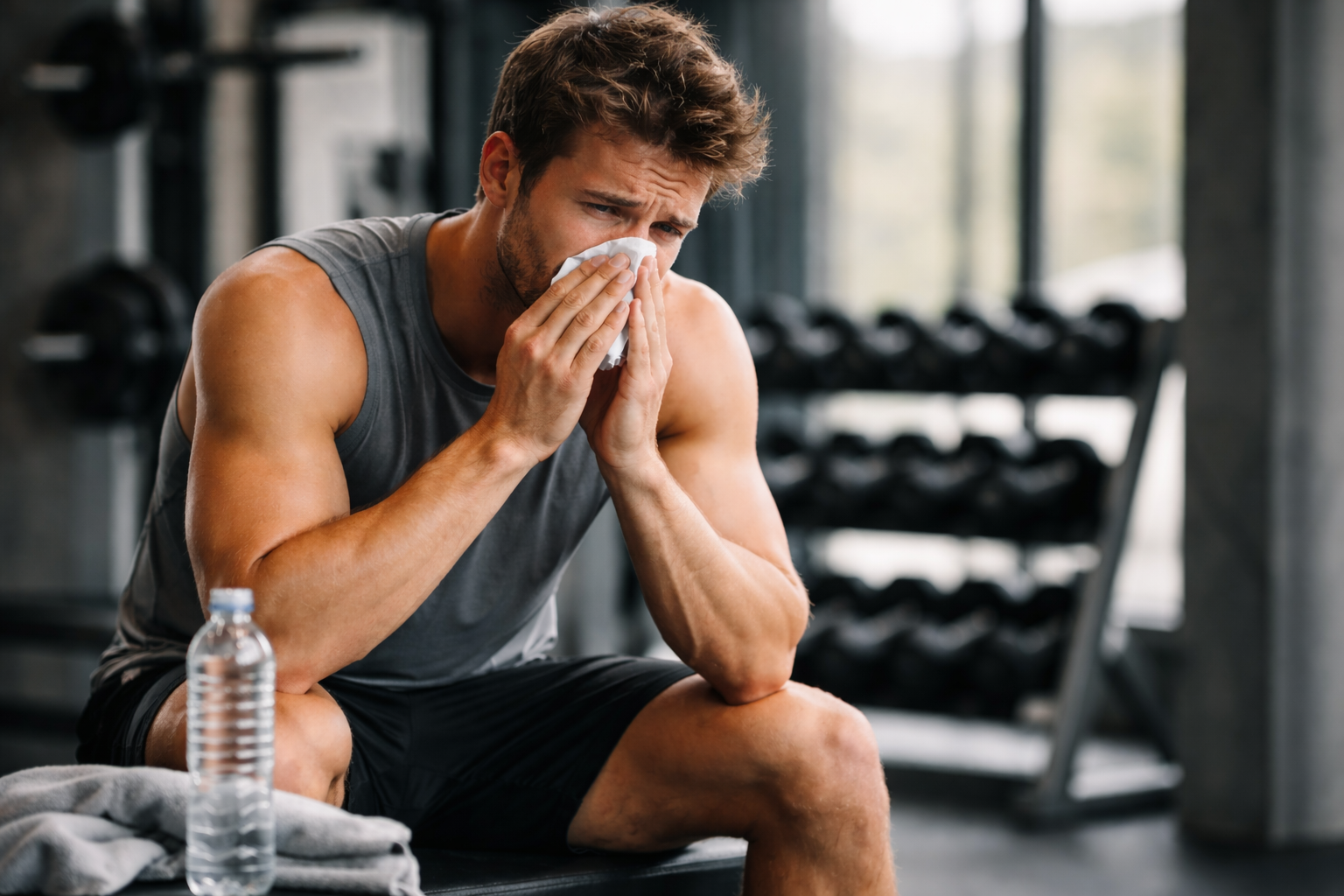
Should I Exercise When I’m Sick?
When you’re sick, your job isn’t to prove how disciplined you are. It’s to make the choice that gets you healthy again as fast as possible without sacrificing your long-term progress.
In this article, you’ll learn how to decide whether you should train at all, what “light” exercise truly means if you do, when staying home is non-negotiable, and how to return to the gym without feeling like you’re starting over.
Why This Question Matters More Than You Think
Most athletes do not ask, “Should I exercise when I’m sick?”
They ask, “Can I push through this?”
Training is a stress. Illness is a stress. When you stack both at the same time, your body often shifts into survival mode instead of recovery and adaptation. That can mean longer symptoms, lingering fatigue, and repeat illness.
As a sports nutritionist and functional dietitian, I see this pattern often. Athletes push through one workout, feel accomplished for a day, then lose a full week of training because recovery never fully happened.
A Simple Way to Decide If You Should Train
Instead of relying on willpower, ask these questions:
-
Do I feel systemically unwell or deeply fatigued?
-
Do I feel worse with movement?
-
Am I debating whether I should train at all?
If you are sick enough to question whether you should exercise, skip your normal workout. That hesitation is usually your body asking for rest.
Training through illness rarely speeds recovery. More often, it delays it.
What “Light” Exercise Actually Means
If symptoms are mild and you feel mostly functional, light activity can be reasonable. But “light” is where most people go wrong.
Light exercise does not mean:
-
Doing your usual workout at slightly lower weight
-
Cutting a few sets but keeping intensity high
-
Turning a short session into a long one “because it feels okay”
Light exercise does mean:
-
Walking
-
Easy cycling or spinning
-
Gentle mobility or stretching
-
Short sessions that leave you feeling better afterward
If your breathing becomes labored, your heart rate climbs quickly, or you feel more drained later in the day, it was not light.
Cut both intensity and volume by at least half. Often more.
When You Should Not Exercise at All
Some situations require full rest. No exceptions.
Do not train if you have:
-
A fever or chills
-
Chest tightness or a deep cough
-
Shortness of breath
-
Nausea, vomiting, or diarrhea
-
Dizziness or significant fatigue
Exercise in these states adds stress to an already taxed immune system and can slow healing. Rest is not laziness. It is part of the recovery process.
And if you are contagious, do not go to the gym. Staying home protects others and prevents spreading illness through your training community.
“I’m Afraid I’ll Lose My Gains”
This fear keeps many athletes training when they should not.
A few days off will not erase your progress.
When people say they look “smaller” after being sick, it is usually glycogen and water loss, not muscle loss. Reduced food intake, lower carb intake, and dehydration flatten muscles temporarily.
True muscle loss takes longer than most people think. Prolonged illness does far more damage to performance than a short rest period.
Nutrition Matters More Than Training When You’re Sick
When you are sick, nutrition becomes the priority.
Focus on:
-
Enough total calories to support immune function
-
Adequate protein to limit muscle breakdown
-
Fluids and electrolytes, especially if appetite is low
-
Easy-to-digest carbohydrates to support immune cells
This is not the time to restrict, “eat clean,” or push weight loss goals. Underfueling while sick often leads to slower recovery and repeat illness.
If you want a deeper understanding of how carbohydrates support immune health and endurance performance, my Eating for Endurance article explains why low fuel availability is one of the most common reasons athletes get sick repeatedly.
How to Return Without Feeling Like You’re Starting Over
Your first workout back should feel easier than expected.
Start with:
-
Shorter sessions
-
Lower intensity
-
A focus on movement quality
If symptoms return, stop and rest another day. Most athletes are back to normal within a few sessions when recovery is respected early.
The Bottom Line
Smart athletes think long term.
The goal is not to win the day you feel sick. The goal is to train consistently over months and years. That requires knowing when rest is the most productive choice.
If you are constantly unsure when to push and when to back off, it usually means your training, fueling, and recovery are not aligned.
My Introductory Session looks at all three together so you can stop guessing and start making confident decisions that protect both your health and performance.
Because the smartest move when you’re sick is not pushing harder.
It’s doing what gets you healthy again, faster.